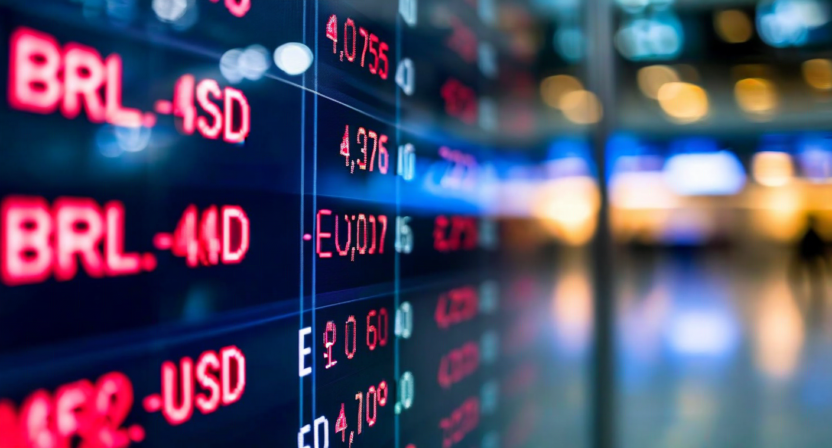
All cross-border payments are not equally difficult. The BRL-USD corridor is well-served, heavily competed, and relatively liquid. The BRL-ARS corridor has historically been a compliance nightmare due to Argentine currency controls. BRL-BOB (Bolivia) is so underserved that many businesses simply route through USD as an intermediate currency, paying two FX conversions for what should be one. "40+ corridors" is a metric we use for a reason — corridor availability varies dramatically, and so does the friction within each one.
How We Define Friction
Friction in a payment corridor has three components: cost, speed, and compliance complexity. A corridor can score badly on one dimension while performing well on others. Argentine FX, for example, has historically had high compliance complexity (multiple exchange rate tiers, capital controls) while the corridor itself can settle relatively quickly once you navigate the regulatory structure. The BRL-PEN (Peru) corridor, by contrast, is often fast and low-compliance-overhead but has limited liquidity in the Brazilian market that widens FX spreads.
Our corridor friction scores below reflect a composite assessment across all three dimensions, based on transaction data from BackChannel's client base through Q3 2025.
Corridor Friction Assessment
| Corridor | Cost Friction | Speed Friction | Compliance Complexity | Overall |
|---|---|---|---|---|
| BRL → USD | Low | Low | Medium | Low |
| BRL → EUR | Low | Low | Medium | Low |
| BRL → ARS | High | Medium | Very High | Very High |
| BRL → MXN | Medium | Low | Medium | Medium |
| BRL → COP | Medium | Medium | Medium | Medium |
| BRL → PEN | Medium | Low | Low | Medium |
| BRL → CLP | Medium | Low | Low | Medium-Low |
| BRL → VES | Very High | High | Very High | Very High |
| BRL → BOB | High | High | High | High |
| BRL → PYG | High | Medium | Medium | High |
The Argentine FX Problem in Detail
The BRL-ARS corridor deserves specific attention because Argentina's currency situation is uniquely complex and has direct implications for Brazilian businesses with Argentine counterparties.
Argentina has historically maintained multiple official exchange rate tiers — the official rate, the dollar tarjeta (card rate), and the dollar MEP/CCL for financial operations. The spread between official and parallel rates has reached extremes of over 100% in recent years. BACEN requires that BRL-ARS FX transactions use the official rate registered in SISBACEN, regardless of what rate the receiving party actually accesses.
Milei's economic reforms in 2024-2025 have significantly simplified the Argentine exchange rate structure, and the official/parallel rate spread has compressed substantially. The compliance picture is improving. But the corridor still requires careful purpose-code classification and counterparty KYC documentation that other LATAM corridors do not.
Currency Controls and the "USD Bridge" Workaround
For corridors with high friction — Bolivia, Venezuela, Paraguay — many companies default to routing through USD as an intermediate currency. BRL to USD at market rate, then USD to the destination currency. Two FX conversions, two sets of transaction costs, but cleaner compliance and more liquid markets at each leg.
This workaround is rational for low-volume flows. At scale, it is expensive. A business processing R$2M per month in BRL-BOB payments, routing through USD, might pay 1.5-2.5% more in FX costs than a direct-rail solution would cost — because USD is liquid but the two-hop structure doubles the FX exposure window and correspondent fee exposure.
"The USD bridge works until you are big enough that the cost of the workaround exceeds the cost of building proper corridor infrastructure. Most companies wait too long to make that transition."
— Guillermo Arslanian, CEO, BackChannel
What Low-Friction Corridors Have in Common
The corridors with consistently low friction share structural characteristics: deep liquidity in both currencies, bilateral regulatory frameworks that provide clear compliance paths, and multiple competing payment providers creating rate pressure. BRL-USD and BRL-EUR both qualify. BRL-CLP is moving in this direction as Chile's payments modernization proceeds.
These characteristics are infrastructure problems, not permanent facts of geography. The corridors that are high-friction today will be lower-friction in five years as LATAM regulatory frameworks converge. The question for businesses is whether to accept current friction costs or invest in infrastructure that can navigate them now.
BackChannel covers 40+ payment corridors from Brazil, including high-friction markets with embedded compliance handling.
Talk to Our Team